How AI face recognition is changing event photography in 2026
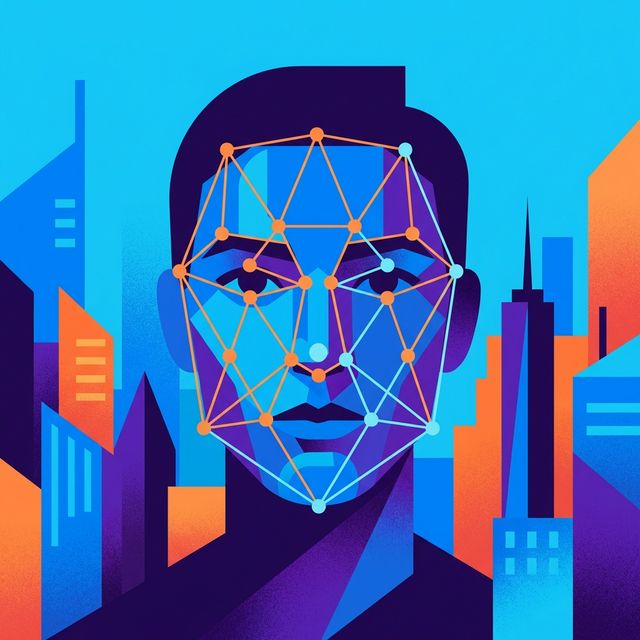
The year is 2026. You're at a high-end wedding in Bangalore. The lights are low, the energy is high, and you've just captured a perfect candid of the bride's sister laughing mid-dance. In the "old" world, let's say 2023, that photo would sit on your SD card for eight days, spend four hours in Lightroom, and eventually land in a 1,200-photo Pixieset gallery that the sister would probably never scroll far enough to find.
In 2026, that sister gets a notification on her WhatsApp before you've even finished your next shot.
"Hey! Here's a photo of you from the dance floor."
She opens it, sees herself looking fantastic, and immediately posts it to her Instagram story with a tag that says "Literal magic by @YourPhotographyHandle."
This isn't just a technological upgrade; it's a fundamental shift in the unit economics of being an event photographer. We've moved from being "memory curators" who deliver a product weeks later to "experience providers" who deliver dopamine instantly. If you're still wrestling with Dropbox links and "where are my photos?" emails, you aren't just behind the curve; you're playing a different game entirely.
The death of the "gallery graveyard"
Let's be honest about the traditional gallery model. You work your tail off for 12 hours. You edit until your eyes bleed. You send over a link to 800+ photos. The couple loves it, sure. But the guests? The 200 people who actually make up the viral potential of your business? They never see most of those shots.
A traditional event gallery is a "pull" system. It requires the guest to:
- Remember that a gallery exists.
- Find the link (usually buried in a group chat).
- Scroll through hundreds of photos that aren't of them.
- Try to download a high-res version on a spotty mobile connection.
Most people give up at step two. The photos, your photos, die in a digital drawer. AI-powered face recognition flips this from a "pull" to a "push" system. By matching faces in real-time, the tech does the "finding" for the guest. It removes the friction of searching. And in the attention economy of 2026, friction is the only thing that matters.
From manual sorting to selfie delivery
To appreciate what changed, look at what the job used to involve. A wedding threw off 1,500 frames. The photographer culled them, edited the keepers, then hit the real chore: working out who was in which shot so the couple could pass photos along to the right relatives. A few photographers tagged faces by hand. Most did not bother and simply handed the whole gallery to the couple, who then became unpaid librarians for their own wedding.
The selfie workflow deletes that entire step. A guest opens WhatsApp, sends one photo of their face, and the matching engine compares it against every frame in the album. Half a minute later they have a private set of only the pictures they appear in. Nobody scrolled, nobody tagged. The guest did the "search" by simply existing in front of the lens, and the software did the sorting that used to eat a photographer's Sunday.
That is the whole shift in one sentence: the work moved from manual sorting after the event to instant self-service during it. For a decade the bottleneck in event photography was not shooting or editing; it was distribution. Face matching is the first tool that treats distribution as the actual product rather than an afterthought you email out once the invoice clears.
Why face "matching" is different from face "surveillance"
Identification is what the government does—linking a face to a name, a database, and a social security number. Matching (which is what AccioPix does) is purely mathematical. It converts a face into a 512-dimensional vector (as pioneered by Google's FaceNet), essentially a long string of numbers, and looks for other photos with that same string of numbers.
When the event is over, the math is discarded. There's no permanent database. No "tracking" across the web. It's a temporary utility designed to solve a delivery problem. Once guests understand that their face isn't being "stored" but rather used as a temporary key to find their own photos, the friction disappears.
The shifting ROI of the event photographer
In the traditional model, your value is tied to your labor. You shoot, you edit, you deliver. You charge for your time and your talent. In the matching-first model, your value is tied to the reach you generate for the client.
Think about a corporate conference. If you take 2,000 photos and deliver them two weeks later, you've provided a "recap asset." If you deliver them instantly via AI matching, you've provided a marketing engine. When attendees post those photos during the event, it drives FOMO for the people who didn't attend. It makes the event look successful in real-time. Organizers aren't just paying for the photos anymore; they're paying for the social buzz that the photos generate.
What the selfie workflow looks like across events
Weddings get the attention, but the same pattern shows up anywhere a crowd wants photos of itself.
Take a corporate conference. Twelve hundred badges, three stages, one photographer sprinting between keynotes. In the old model, attendees got a shared drive link a week after they had flown home and forgotten the hashtag. With selfie matching, someone sends a selfie during the coffee break and pulls the three shots of themselves at the panel they spoke on. They post one before lunch, and the conference is trending on LinkedIn while it is still happening.
Or a college fest. Two thousand students, nobody with a budget for prints, everybody after the one photo where they looked good on stage. Handing that crowd a folder to scroll through is a non-starter. Handing them a selfie box that returns only their own shots is the one thing that scales to that many faces at once.
Even a race fits. A 10K has hundreds of finishers who all cross the same arch. Bib numbers help, but a selfie is faster than reading a smudged number through motion blur, and the runner gets their finish-line photo before the medal is off their neck. The common thread is that none of these people want a gallery. They want the four pictures of themselves, and they want them now. Matching is the only delivery method that hands a stranger in a crowd exactly that, with no support ticket in between.
The "WhatsApp first" approach: meeting guests where they live
Nobody wants to download your app. They have 400 apps they don't use. They have limited storage. They have a password manager that's annoying to use on mobile.
The revolution of 2026 happened when we stopped building apps and started building on top of the "OS of the people": WhatsApp. By delivering photos directly through a chat interface, you're removing the ultimate barrier: the user interface. Everyone knows how to use WhatsApp. It handles the compression, it handles the notifications, and it handles the social sharing natively.
If you're the photographer covering this event
The "AI revolution" isn't about replacing your eye; it's about replacing your administration.
- The "Whose Photo Is This?" Problem: Stop fielding DMs from the Groom's cousin asking if you got any shots of him. Redirect that energy. Tell the guests at the start: "Hey, scan the code on your table, give it a selfie, and it'll find you. I'm just here to make you look good."
- The Referrals Loop: Every time a guest gets an instant photo on their phone, they see your name. Not a week later when they've forgotten the vibe, but now. Your branding is attached to the peak moment of their excitement. This is how you go from one booking per event to three.
- Pricing as a Pro: Stop competing on "how many hours I shoot." Start competing on "how much engagement I drive." A photographer who offers instant AI delivery is a different tier of professional than one who doesn't. You can—and should—charge for it.
- The Hardware Reality: You don't need a special "AI camera." You just need a workflow that gets photos from your SD card to the cloud. Whether you're tethering via a mobile hotspot or uploading a batch during the lunch break, the "revolution" happens on the server, not in your lens.
The economics are not the barrier people assume. Running a 500-photo event through AccioPix costs about ₹100 in credits, which you fold into your package and forget about. The math that matters is on the other side: one guest who posts an instant photo and tags you can be worth the next booking.
If you're looking for more ways to grow your photography business, check out our photographer's guide to instant photo delivery or see how other photographers use AccioPix.
AI face recognition for events: FAQs
How does AI face recognition find my event photos?
You send one selfie, usually over WhatsApp. The software turns your face into a string of numbers and compares it against every photo in the event album, then hands back only the frames you appear in. You never scroll a gallery or guess which folder is yours; the match does the finding for you.
Do guests need an app to get their photos?
No. The whole point of the WhatsApp-first approach is that there's nothing to install, no account to create, and no password to reset. If you can send a selfie in a chat, you can collect your photos. That's what makes it work for a 60-year-old uncle and a 20-year-old cousin at the same event.
Is AI face matching at an event private?
Matching isn't the same as surveillance. Your face is used as a temporary mathematical key to find your own pictures, not stored in a permanent database or tracked across the web. When the event wraps, the math is discarded, so there's no profile of you left sitting on a server.
How fast do guests actually get their photos?
Once the photographer has uploaded the album, matching returns results in seconds rather than the days a hand-sorted gallery takes. A guest can get their photo while the event is still going, which is the whole reason instant delivery drives far more sharing than a link sent the following week.
The neural networks and linear algebra behind AI photo matching and discovery.
Why face matching is different from surveillance and how it stays secure.
A roundup of the top AI face-recognition apps for delivering event photos.